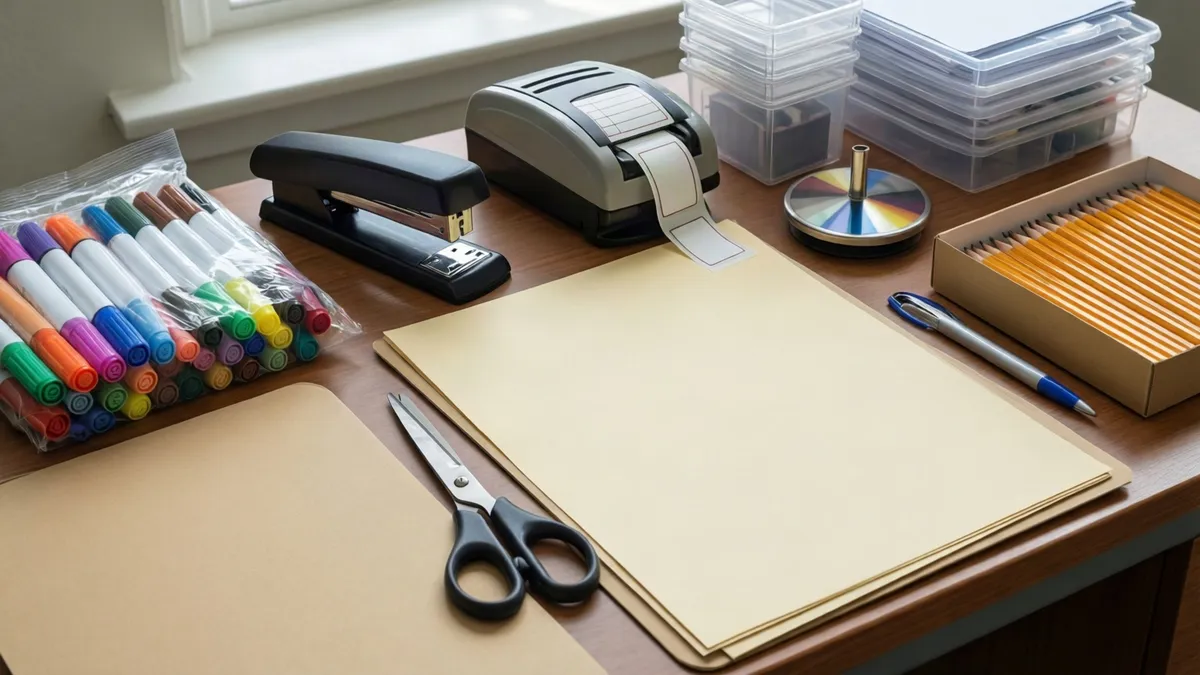
In short: Black Friday works for teacher gifts when you ignore the store's "teacher" display and buy the durable version of something the classroom already uses. The deals open online the Monday before Thanksgiving, peak on Black Friday, and trail off by Cyber Monday. One family usually spends under $25; a pooled class gift lands at $25 to $50 per family. Check your district's policy before you buy.
We write buying guides, not reviews: nothing here has been handed to a real class by us. Specs come from the manufacturer or the listing, and whatever Amazon shows when you click is the authoritative figure.
This article contains affiliate links. If you buy through one, we earn a small commission at no extra cost to you. We only recommend what we would suggest to a friend.
The Federal Trade Commission's endorsement guides, 16 CFR Part 255, require a disclosure like that one to be difficult to miss, so it sits above every link here. Our full affiliate disclosure has the rest.
A sale is an excuse to buy the good thing. It is never a reason to buy a mediocre thing, and the "teacher" shelf is where mediocre things live: mugs, scented candles, ornaments shaped like apples. Our pillar guide, Gifts for Teachers That Aren't Another Mug, makes the full case against that shelf.
Black Friday teacher gifts deserve better logic. A classroom is the smallest workspace you will ever shop for, and the deal calendar is short. This page runs the decision in order: the room, the dates, the budget, the categories.
Start With the Room, Not the Shelf
Here is the case for deals. Teachers buy classroom supplies with their own money, so a discount on something the room burns through anyway is a real cut to a real budget, not a manufactured want.
The money behind that is documented. The RAND Corporation's 2025 survey found teachers reported an average base salary of about $73,000, while similar working adults reported just over $103,000. That gap is why a half-price pack of supplies matters more than a novelty.
So the room sets the standard, not the sale tag. Something used up by June beats something that needs a shelf. Thirty people move through that room a day, and none of them need another candle.
When the Deals Open, and When They Close
Mark three dates. In 2026, the main online sales open Monday, November 23, the day before Thanksgiving week. Black Friday itself is Friday, November 27, when the deepest storewide discounts land.
Then Cyber Monday, November 30, when the trails off begins. By that Tuesday, most classroom-supply deals have reverted to ordinary prices. Shop the durable thing early in the week; the cheap version of the plan is waiting too long and grabbing whatever is left.
One calendar note: Teacher Appreciation Week, the U.S. observance held the first full week of May, is a separate event with separate deals. Do not buy a November gift and hold it until May. Christmas gifts have their own logic too, which we cover in Christmas Gifts for Teachers: Consumable Beats Decor.
Set the Budget: One Family or the Whole Class
Two different gifts, two different numbers. Price bands below are ours, not a sourced figure: a single family usually lands under $25, and a pooled class gift runs $25 to $50 per family.
In our comparison of 9 ranking guides on this topic, prices mentioned run roughly $11 to $55, with a median around $25. The median is one family's spend. A pooled gift is a different animal entirely, and How to Organize a Class Gift for a Teacher walks the logistics.
Pooled also spreads the load fairly. In the same 2025 RAND survey, Black teachers reported earning about $4,400, or 6 percent, less than White teachers on average. Female teachers earned about $7,000, or 9 percent, less than male teachers. Families' own budgets vary just as much. Pooling asks less of any single household.
The Only Three Categories Worth Buying
Three categories survive contact with a real classroom. The table's left column is what the teacher shelf sells; the right column is our editorial call about what the room actually needs.
| Category | The cheap version the shelf sells | The durable version the room needs |
|---|---|---|
| Desk supplies | Scented notepad set, apple-shaped stapler | Bulk dry-erase markers, a full-staple stapler, quality scissors |
| Classroom organization | Decorative storage box | A small label maker, stackable bins, a sturdy turntable for the group table |
| Consumables | A mug with candy inside | Good coffee or tea, quality pencils, a home laminator for materials the teacher preps |
Our take: Our call is desk supplies first, organization second, consumables third. Supplies get used daily by the whole room, organization tools outlast the school year, and consumables are the safe pick when you know nothing about the classroom. Skip the shelf version in all three.
If you want the fuller version of this reasoning outside a sale, it lives in Best Gifts for Teachers: Buy for the Room.
Skip the Personalized Gift Rush
Personalized deals look like a bargain and behave like a trap. Custom items usually carry longer turnaround times, so a Black Friday order may not arrive before winter break, and personalized anything cannot be returned or regifted.
There is a better reason to go durable, and it has data behind it. The RAND survey reported in 2025 that teachers' intent to leave the job fell to 16 percent from 22 percent the year before. Odds are good your teacher stays, so the durable thing will still be in that room next fall.
A personalized touch costs nothing and lands better anyway: the card. Name something specific the teacher did for your child. That part nobody can put on sale.
Gift Cards or the Durable Thing
Reason about the room, not about preference polls. A teacher working 49 hours a week, ten hours more than contracted, per the same 2025 RAND survey, does not have an evening to browse for supplies. A card to a store that sells classroom materials converts directly into something the room needs, on the teacher's schedule.
The durable thing wins when you know the room. If your child has mentioned dried-out markers or a jammed pencil sharpener all fall, you know more than a gift card can express.
Know nothing about the room? Buy the card. A gift card is not an insult; it is respect for a schedule you cannot see.
Find Local Deals Without the Scramble
Store ads publish early, usually the first half of November. Read them for the categories above, not for the word "teacher," which mostly flags the shelf you are avoiding.
Office-supply chains run their steepest doorbusters on consumables: markers, pencils, paper. Craft chains discount storage and organization hardest, and several run educator discount programs year-round, which stack with sale prices. Big-box retailers cover the rest.
Ask the front office one question: "where do the teachers around here shop the sales?" Office staff know which local stores restock classroom supplies and which deals teachers mention. That sentence beats any deal aggregator.
The Final Check Before You Hand It Over
Three things stand between a good deal and a good gift. Our suggested checklist:
- Ask the front office about the district's gift policy. What a teacher may accept is set locally, and we do not publish a figure, because there isn't one that is true everywhere.
- Check allergy needs through the room parent before any food or scented item.
- Confirm delivery timing. The gift should arrive before the last day before winter break, not after.
- Tape the receipt to the inside of the packaging, or skip paper receipts and keep the digital one.
- Let your child write the card themselves. It is the half that gets kept.
Rules on limits live in district handbooks, and Are Teachers Allowed to Accept Gifts? Where Rules Live explains where to look.
How much should I spend on a Black Friday teacher gift?
Under $25 from one family is the normal band, and a pooled class gift runs $25 to $50 per family. Both bands are our editorial judgment, not a rule. If money is tight this year, a handwritten note plus one consumable costs a few dollars and loses nothing.
Do teachers prefer gift cards or physical gifts?
We decline to answer as a preference question, because the honest answer depends on the room. What the 2025 RAND survey does show is that 46 percent of teachers said they were better off financially than their parents, against 61 percent of similar working adults. Tighter household budgets mean consumables and cards get used, not shelved.
Are there Black Friday deals on personalized teacher gifts?
Yes, but order early. Personalized items carry longer production times, so a late-November order may miss winter break entirely, and most cannot be returned. If you want personalization, put it on the card, not the object.
When is Teacher Appreciation Week, and are the deals better?
It is the first full week of May, with National Teacher Day on the Tuesday of that week. Deals that week are thinner than November's, because retailers build their discount calendar around the holiday season. Buy durable in November; write the card in May.
Which stores have the deepest discounts on classroom supplies?
Office-supply chains tend to run the steepest doorbusters on consumables like markers and pencils. Craft chains discount storage and organization, and their year-round educator discounts can stack on top. Compare the published ads in early November rather than trusting any single store's banner.
Maggie Torres writes buying guides, not reviews; nothing here was tested by us.
Sources
- RAND Corporation — "Teacher Well-Being, Pay, and Intentions to Leave in 2025: Findings from the State of the American Teacher Survey" (https://doi.org/10.7249/RRA1108-16) "Retrieved 2026-09-25".
- Federal Trade Commission — "Guides Concerning the Use of Endorsements and Testimonials in Advertising" (https://www.ftc.gov/legal-library/browse/federal-register-notices/guides-concerning-use-endorsements-testimonials-advertising) "Retrieved 2026-09-25".